The Death of the Base Card: Why Modern Rarity, Low-Print Parallels, and Serialization are Reshaping Card Collecting
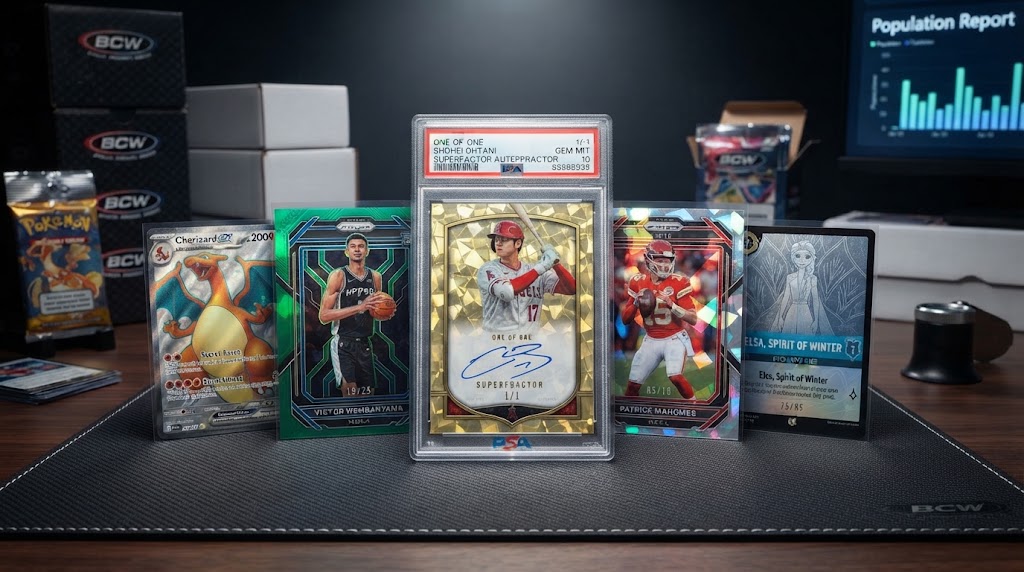
The sports and trading card game (TCG) collecting landscape has undergone a profound structural transformation over the last several years. Gone are the days when pulling a standard, unnumbered rookie card of a generational superstar guaranteed long-term liquidity or portfolio appreciation. Today, the hobby is driven entirely by an obsession with micro-scarcity, serialized parallels, and hyper-targeted rarity tiers.
To understand where the market is heading—and how modern collectors, investors, and online sellers must adapt—we have to examine how modern manufacturing has altered the economics of supply and demand, why base cards have been relegated to secondary status, and how serialized rarity now dictates the true elite tier of the hobby.
The Architectural Shift: From Mass Production to Micro-Scarcity
To appreciate the modern focus on rarity, we must look back at the lessons learned from previous eras. The "Junk Wax" era of the late 1980s and 1990s flooded the market with millions of identical base cards, rendering massive print runs effectively worthless because supply vastly outstripped organic demand.
Fast forward to the modern era of sports and TCG manufacturing. While print runs across major brands (like Topps, Panini, and Upper Deck in sports, as well as Pokémon and Disney Lorcana in TCGs) remain high to meet massive global retail demand, manufacturers have introduced tiered parallel systems to artificially segment the market. They produce millions of base cards to satisfy retail box openings, hobby pack rips, and casual buyers, but they channel all structural investment value into low-print inserts and color-match parallels.
Consequently, the standard base card has experienced a rapid devaluation. Even for elite players and chased characters, a raw base card is now viewed primarily as a common filler piece rather than a cornerstone asset. The entire financial gravity of the hobby has shifted away from mass-produced volume and anchored itself firmly in scarcity.
The Anatomy of Modern Parallels: Serialization, Color-Matching, and 1-of-1s
Modern rarity is no longer left to guesswork or subjective population estimates. Card manufacturers now stamp production numbers directly onto the back or front of cards—a process known as serialization.
Serialization has created a precise hierarchy of value that dictates market liquidity:
The Rainbow Effect: Modern flagship and high-end sets feature dozens of parallel variations differentiated by foil finish, border color, and stamp count.
Tiered Thresholds: Common scarcity tiers typically run from /299 or /199 down to /99, /50, /25, /10, and /5 (such as Red or Gold variants).
The Holy Grail (1-of-1s): At the pinnacle sit true One-of-One cards—Superfractors, Black Finite parallels, and stamp-verified unique pulls. These items serve as price anchors for entire player and character runs, often commanding massive auction prices because collectors know absolutely no duplicate exists.
Color-Matching: A massive micro-trend within parallel collecting is "color-matching," where a parallel's border or foil color matches the team jersey or character aesthetic (e.g., a Green parallel numbered /5 matching a team's primary jersey color). These command substantial premiums over non-matching serial numbers of the exact same print run.
On-Card Autographs vs. Sticker Autos: The Gold Standard of Authenticity
In lockstep with the rise of serialized parallels is the evolution of autograph collecting. For decades, sticker autographs—where a player signs clear adhesive labels that are later applied to card stock—helped manufacturers streamline production across massive checklists. However, modern collectors have drawn a hard line in the sand regarding authenticity and aesthetic appeal.
Today, on-card autographs are universally treated as the gold standard. Collectors heavily discount sticker autographs because they lack direct interaction between the athlete or artist and the physical card stock. When combined with low-print serialization (such as an on-card rookie autograph numbered out of 25), these cards represent the absolute apex of modern portfolio building. The physical craftsmanship, clean presentation, and guaranteed direct contact make them immune to the broader market dips that affect high-print sticker-auto inserts.
Cross-Market Parallels: How Sports Cards and TCGs Share the Same DNA
While sports card collectors and TCG enthusiasts (whether trading Pokémon, Magic: The Gathering, or Disney Lorcana) historically operated in separate silos, the structural shift toward rarity has unified their philosophies.
In Sports Cards: Ultra-modern releases rely on cracked-ice foils, atomic refractors, and case-hit inserts (such as SSP photo variations) to create chase elements that keep box-breaking vibrant.
In TCGs: The exact same mechanics apply. Standard common and uncommon cards are abundant for deck-building and playability, but the collector market revolves around "Secret Rares," alternate-art illustrations, hyper-foils, and first-edition or special-stamped printings.
Across both domains, the market has realized that utility and mass availability drive down long-term value, while aesthetic exclusivity and strict print caps drive long-term retention.
Valuation Dynamics: Liquidity, Population Reports, and Grading ROI
As rarity has taken center stage, the secondary market (across platforms like eBay, Mercari, and live auction houses) has matured rapidly. Buyers no longer buy blind; they rely on transparent data ecosystems:
Population Reports (Pop Reports): Professional grading companies (such as PSA, BGS, and SGC) publish exact counts of how many copies of a specific card exist in each grade tier. A card with a print run of /25 that has only two copies graded a Gem Mint 10 commands exponential market leverage compared to a base card with a population in the tens of thousands.
Grading Arbitrage: Because base cards have low margins, modern submitters almost exclusively screen raw cards for microscopic flaws before paying grading fees. Submitting a high-end serialized parallel for professional encapsulation protects its condition and maximizes liquid return, whereas grading a high-print base card often yields negative return on investment once grading and shipping fees are factored in.
Actionable Inventory Audit Checklist
Audit Holdings: Separate all high-print, unnumbered base cards from serialized parallels and short-print inserts to isolate true investment assets from bulk inventory.
Verify Pop Reports: Check grading registry population data before submitting modern parallels to professional grading services to ensure low population density in top-tier grades.
Prioritize Scarcity Thresholds: Restrict future raw acquisitions strictly to cards featuring serialization thresholds of /99 or lower, true on-card autographs, or verified case-hit rarity tiers.